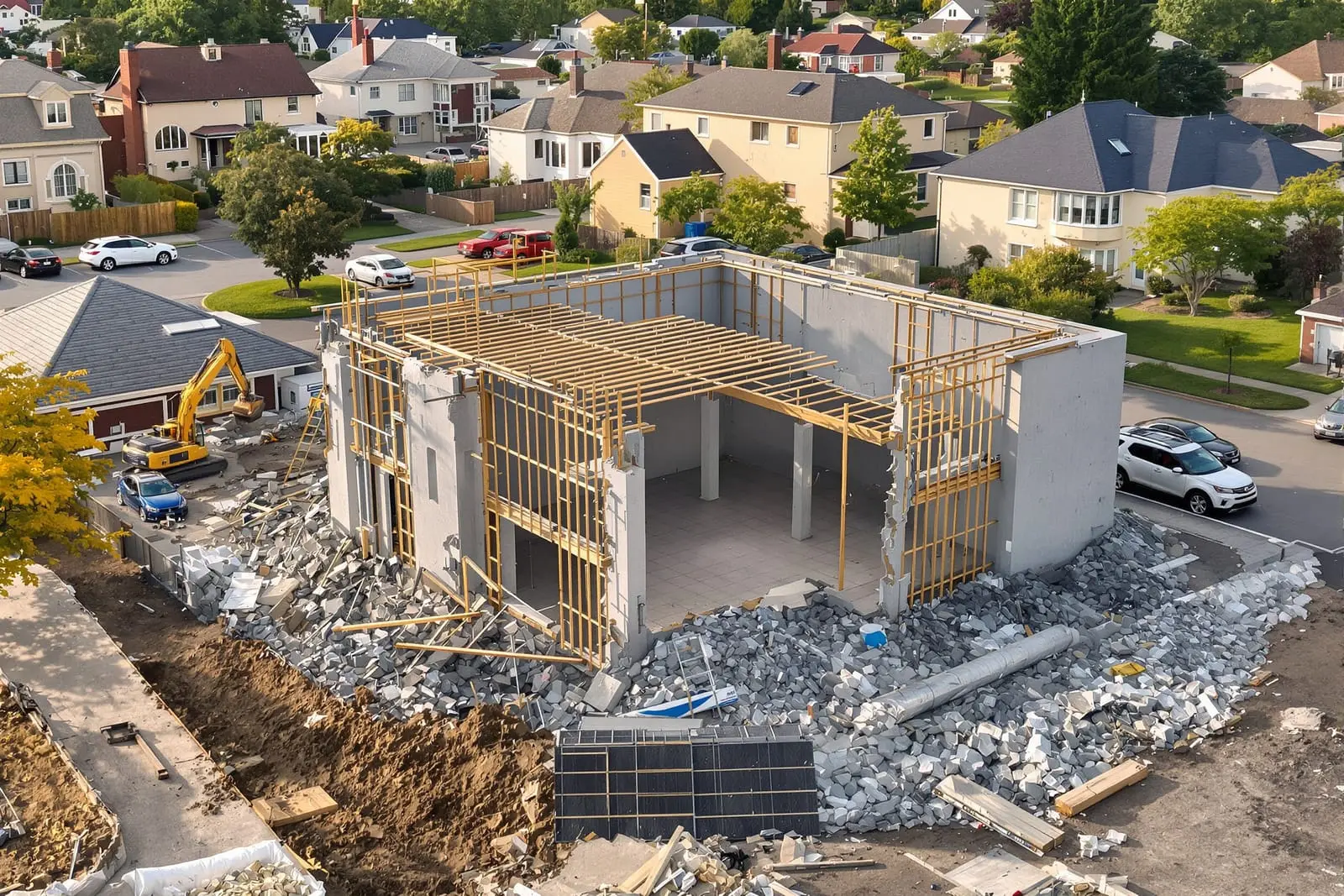
Our structural building demolition services in Atlanta, GA handle complex commercial and industrial tear downs. We work with engineers to plan controlled removal of steel, concrete, and masonry structures. Safety, dust control, and sequencing are carefully managed to protect nearby properties and infrastructure.
Wrexo Demolition Atlanta provides professional structural building demolition throughout Atlanta, GA and the surrounding area. Our licensed, insured crew delivers safe, clean, on-time work with a free estimate before anything begins. Call (678) 561-8690 or request your free quote.
Structural Building Demolition in Atlanta, Done Right
Structural building demolition is more than just tearing a structure down. In Atlanta, it means understanding older brick storefronts in Grant Park, mid‑century block buildings in Decatur, and modern steel‑frame commercial spaces along Peachtree. Wrexo Demolition Atlanta focuses specifically on safely removing the load‑bearing parts of a building so you can rebuild, redevelop, or clear a site without surprise costs or delays.
When you call us, we start by asking how you plan to use the property next. A full scrape for new construction near the BeltLine calls for a different approach than partial removal of a wing in a busy retail center. We walk the building with you, look at existing structural drawings if they are available, and physically verify what is load bearing versus cosmetic. Our goal is to protect what needs to stay, remove what must go, and keep your neighbors, workers, and nearby traffic safe while we do it.
Because Atlanta properties are often close together and near active sidewalks, we plan each structural demolition to control dust, vibration, and noise as much as realistically possible. We coordinate work hours, truck routes, and staging areas around nearby schools, MARTA routes, and tight neighborhood streets so the process is disruptive for the shortest possible time.
Our Step‑by‑Step Structural Demolition Process
Wrexo Demolition Atlanta follows a clear process that keeps structural building demolition predictable and transparent.
1. Site assessment and structural review: We start by inspecting the building, noting materials like brick, CMU block, steel, or wood framing, and any visible issues such as cracks, bowing walls, fire damage, or prior unpermitted alterations. If you have engineer reports, we review them. For older structures around Downtown and West End, we pay close attention to unreinforced masonry and outdated connections that may fail unexpectedly.
2. Utility locating and disconnection: Before any structural member is touched, we coordinate shutoffs and verifications for power, gas, water, sewer, and communications. In many Atlanta neighborhoods, older gas lines and shared utility easements are still common. We verify actual service locations in the field rather than trusting old plats, which helps prevent dangerous hits and service interruptions for your neighbors.
3. Engineering and sequencing: Structural building demolition requires a plan for the order of removal. We determine which beams, columns, walls, and floor systems can be removed first while keeping the structure stable. For partial demos, such as removing only one side of a warehouse, we design a sequence that keeps the remaining building properly braced. Temporary shoring or cribbing is installed where needed.
4. Equipment and access planning: Tight city lots and hilly Atlanta terrain affect which machines we bring. On larger open sites we may use high‑reach excavators. In constrained alleys or urban infill lots we rely more on smaller excavators, skid steers, and selective hand demolition. We plan equipment access to avoid crossing fragile driveways, neighboring parking decks, or tree root zones that must be preserved.
5. Controlled structural takedown: Once everything is set, we remove structural elements in a controlled order, starting from the top and working down. Floors, roof systems, and key load‑bearing walls are taken out in sections, not all at once. Our operators and ground crew communicate constantly by radio so everyone knows which member is being removed and where debris will fall.
6. Sorting, loading, and cleanout: As framing and structure come down, debris is separated at the site for concrete, brick, metal, and general waste. This keeps the site more organized and often reduces disposal fees. We do a final cleanup to leave the pad or soil surface ready for your next contractor, whether that is a builder, foundation crew, or utility installer.
Techniques and Equipment We Use for Safe Structural Demolition
Different Atlanta buildings call for different structural building demolition methods. Wrexo Demolition Atlanta does not force one technique on every project. Instead, we match the method to your structure, schedule, and surroundings.
Mechanical demolition with excavators is our most common approach for full building takedowns. For one and two‑story structures with good access, we use excavators sized to the site so the machine can safely reach upper walls and roof framing while staying a controlled distance away. Grapple attachments let us pull down sections of walls and floors accurately while keeping large debris contained.
For multi‑story concrete or steel buildings, or when we are removing only certain portions of a structure, we often combine mechanical demolition with selective hand demolition. This can involve cutting steel beams, removing individual precast panels, or hand‑demolishing stair towers and elevator shafts. In denser areas like Midtown and Old Fourth Ward, this mixed approach reduces risk to shared walls and neighboring structures.
In some projects we use saw cutting or core drilling to cleanly separate structural elements that must remain from those that are being demolished. Cutting slab edges, beams, or CMU walls before removal can prevent damage to attached structures and reduce vibration. This is especially useful in strip centers where one tenant space is being demolished and others must stay open.
Dust control and vibration management are always part of the plan. Atlanta clay and older brick can create heavy dust if not controlled, so we use water spray bars, hose lines, and misting systems as needed. For sensitive neighbors or medical facilities, we may limit certain activities to specific hours and monitor vibration so it stays within acceptable ranges.
Permits, Regulations, and Atlanta‑Specific Requirements
Structural building demolition in Atlanta involves specific permits and environmental checks, and missing one can stop your project for days. Wrexo Demolition Atlanta helps you navigate this part so the site is cleared correctly the first time.
In the City of Atlanta and nearby jurisdictions like DeKalb and Fulton counties, most structural demolitions require both a demolition permit and verification of utility disconnects. Depending on the age of the building and type of materials, an asbestos survey is typically required before structural work can begin. Older homes and commercial buildings, especially pre‑1980 properties in neighborhoods like Inman Park or Kirkwood, frequently contain asbestos or lead paint, so an inspection is not optional.
If asbestos or other regulated materials are found, they must be abated by a licensed remediation contractor before structural components are demolished. We coordinate our schedule around this step so there is no gap between clearance and structural demolition. We can also connect you with reputable local abatement firms if you do not already have one.
Historic districts and special overlay zones in Atlanta may have additional review steps, particularly if you are demolishing a contributing structure or working near shared brick party walls. We help you understand what must be protected, documented, or preserved. On some projects, we collaborate with your architect or engineer to keep certain facades or structural elements while removing the rest of the building.
We also address site controls that inspectors look for, like fencing, signage, erosion control for exposed soil, and safe truck access and exit routes. Having these in place early protects you from stop‑work orders and keeps relationships with neighbors and city officials positive.
What Affects the Cost of Structural Building Demolition
Customers often ask why two buildings of similar size can have very different demolition costs. Wrexo Demolition Atlanta explains our pricing up front so you understand what is driving your structural building demolition budget.
Structure type and construction method are major factors. A small wood‑frame building with a simple gable roof takes less time and lighter equipment than a reinforced concrete building or a steel‑frame warehouse with heavy mezzanines. Unreinforced masonry, which is common in older Atlanta commercial strips, may require more cautious sequencing and bracing, which adds labor.
Site access and logistics are just as important. An open site with direct street access for trucks and excavators is less expensive to demolish than a landlocked building behind other structures or down a narrow city alley. If we must use smaller equipment, hand load debris, or stage materials off‑site, time and cost will increase.
Environmental factors and hazardous materials also affect the budget. Asbestos abatement, lead paint considerations, and special handling for contaminated soil or underground tanks are separate costs, but they influence how and when structural demolition can occur. We help you anticipate these based on the building age and typical Atlanta construction for that era.
Recycling and salvage can sometimes offset part of the cost. Concrete and masonry can often be crushed and reused as fill or road base. Structural steel and certain metals have scrap value. When you are open to material salvage, we design the structural demolition plan so these materials are separated cleanly and hauled to the right facilities, which can reduce disposal fees and support your sustainability goals.
Why Atlanta Property Owners Choose Wrexo for Structural Demolition
Structural building demolition affects everything that comes next on your project. Choosing a contractor that understands both the engineering side and the local Atlanta realities helps you avoid costly surprises.
Wrexo Demolition Atlanta focuses on clear communication before and during the work. We walk you through the sequence so you know what will happen in the first week, how loud it will be, where trucks will park, and how long it will take to reach a clean, level site. For property managers and developers, we can coordinate updates with tenants and neighbors so they are not caught off guard by vibration or street closures.
Safety is built into our workflow. Our crews follow strict procedures for working around partially unstable structures, using spotters for all equipment movements, and securing the site after hours. We understand the extra care needed in Atlanta for mixed‑use properties where pedestrians, deliveries, and active businesses may be very close to the work zone.
We also stay accessible. If your plans change during demolition, for example you decide to preserve more of the structure than originally planned, we discuss options with your engineer and adapt the sequence. Because we perform both full and partial structural demos across Atlanta, from single retail pads to multi‑building complexes, we can advise you on what is realistically possible at your site.
If you are planning structural building demolition anywhere in the greater Atlanta area, from Sandy Springs to College Park, Wrexo Demolition Atlanta is ready to evaluate your building, explain your permitting and environmental obligations, and provide a detailed plan and estimate so you can move forward with confidence.
“
Professional structural building demolition, done right the first time, quality materials, honest pricing, and results that last.
Wrexo Demolition Atlanta
Structural Building Demolition Across Our Service Area