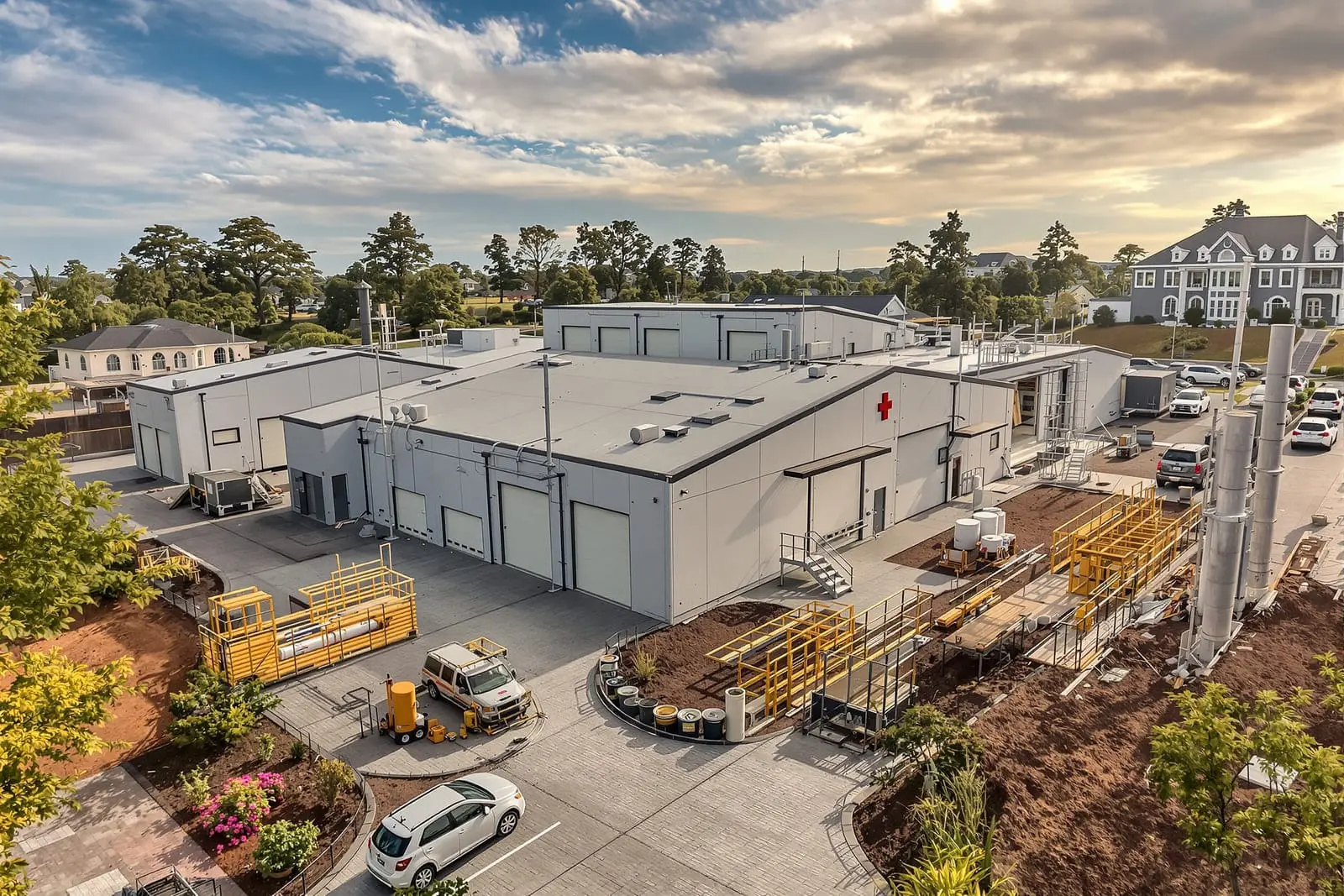
Our plant decommissioning and dismantling services in Atlanta, GA guide industrial owners from shutdown through demolition. We inventory equipment, isolate utilities, remove process lines, and demolish structures as required. Environmental compliance, asset recovery, and documentation are integrated into every project plan.
Wrexo Demolition Atlanta provides professional plant decommissioning throughout Atlanta, GA and the surrounding area. Our licensed, insured crew delivers safe, clean, on-time work with a free estimate before anything begins. Call (678) 561-8690 or request your free quote.
Plant Decommissioning in Atlanta: What It Really Involves
When an industrial plant in Atlanta reaches the end of its useful life, shutting it down safely is a lot more than locking the doors. Plant decommissioning is a staged process that includes isolating utilities, cleaning hazardous residue, dismantling structural and process systems, and removing concrete foundations so the site can be reused or sold. Wrexo Demolition Atlanta focuses on planning every step around your operations, environmental obligations, and schedule.
A typical project starts with a site walk where we review as-built drawings, permitting history, and current use of each area. In older Atlanta facilities, drawings are often incomplete or wrong, so we verify locations of buried utilities and undocumented equipment before any cutting or breaking begins. We map out critical paths, identify what must stay operational during partial shutdowns, and create a sequence that prevents bottlenecks for other contractors like environmental consultants or equipment movers.
Because Atlanta has a mix of legacy manufacturing, food processing, and distribution facilities, each plant decommissioning job is different. Some projects focus on removing heavy process lines and concrete pits, others are about cleaning and clearing to meet a property sale deadline. Wrexo Demolition Atlanta builds a decommissioning plan that fits your specific end goal, whether that is a clean shell building, a redevelopment-ready slab, or a complete return to graded soil.
Step by Step: How Wrexo Handles Plant Decommissioning and Dismantling
Our process is structured so you always know what is happening on site and why. First, we complete a hazard and utility isolation assessment. That includes confirming shutoffs for electrical feeds, natural gas, steam, chilled water, compressed air, and process lines. Where live utilities must remain for other tenants or adjacent buildings, we coordinate with your facility team and the utility providers to establish hard isolations and lockout/tagout points.
Next, we perform a detailed asset and equipment inventory. If you plan to sell or relocate machinery, Wrexo Demolition Atlanta sequences dismantling so high value assets can be removed first while keeping safe access for riggers and haulers. We use color coding and clear labeling so reusable items are not damaged or accidentally scrapped.
Once the plant is safe and assets are categorized, dismantling begins from the top down and outside in. We remove overhead utilities and pipe racks, then process lines, mezzanines, tanks, and finally concrete pedestals and foundations. For multi level structures, we often dismantle by bay so work can progress while other areas are still occupied or being cleaned. Throughout the work we maintain debris control, clear egress paths, and daily housekeeping to keep the site safe for your staff and inspectors.
At the close of the project, we handle final surface prep such as sawcutting clean slab edges, infilling pits, or scarifying areas where bonded material must be removed to meet future flooring specs or environmental closure requirements.
Concrete Removal, Foundations, and Slab Restoration
Decommissioning almost always involves extensive concrete work, from equipment pads to thick foundations under production lines. In many Atlanta plants, these elements were added over decades, so you may have layers of overlays, repairs, and buried beams. Wrexo Demolition Atlanta uses non destructive testing where needed, along with exploratory sawcuts, to understand thickness, reinforcement, and what ties into load bearing elements.
For interior plant areas, we typically use electric saws and low emission equipment so air quality remains safe and neighbors are not disturbed, especially in dense Atlanta industrial corridors near residential zones. Slabs are sawcut into manageable sections, then broken and removed with compact machinery that can get through existing doors and aisles. Where vibration could affect nearby tenants, we switch to methods that limit impact, such as wire sawing or selective coring of key areas before breakout.
Removing pit foundations, machine pedestals, and trench drains is often the trickiest part. We determine whether it is better to demolish down to subgrade and backfill, or to partially remove and structurally tie new concrete into what remains. This decision affects cost and schedule, so we walk you through options with sketches and examples from similar Atlanta facilities. Our crews also dispose of contaminated concrete separately if testing indicates oil, solvent, or heavy metal impacts that must go to special handling facilities.
Environmental Compliance and Hazard Management in Georgia
Most industrial plant decommissioning projects in Georgia involve some environmental oversight. That might be an industrial wastewater permit, a stormwater plan, or a soil and groundwater monitoring program. Wrexo Demolition Atlanta does not replace your environmental consultant, but we work closely with them to stay compliant with your permits and closure plans.
Before dismantling process lines or tanks, we confirm that materials have been drained, triple rinsed, or cleaned to the standard your consultant specifies. For asbestos containing materials in pipe insulation, floor tile, or roofing, we coordinate with licensed abatement contractors and sequence our demolition around their work so nothing is disturbed prematurely. Where lead based paint or PCB containing equipment is present, we establish designated removal zones and labeled staging so regulated waste is never mixed with clean scrap.
On many Atlanta projects, stormwater control is a major issue, especially during the spring and early summer storm seasons. We plan stockpile locations and site traffic so runoff does not carry sediment or debris to drains or nearby streams. If required, we install silt fence, inlet protection, or temporary berms to keep the site in line with the Georgia EPD and City of Atlanta expectations.
Proper documentation matters at the end of a plant decommissioning project. We retain manifests for regulated waste, scrap tickets, and load counts for concrete and general debris so your environmental consultant can complete closure reports and you have a clear record of how materials left the site.
Scheduling, Seasonal Factors, and What Drives Cost in Atlanta
Timing a plant decommissioning project in Atlanta is about more than picking a start date. Weather, local labor demand, and your internal shutdown windows all affect cost and risk. Heavy exterior concrete removal and site grading are usually more efficient in late fall and winter, when afternoon thunderstorms are less frequent and heat stress is lower for crews. Interior dismantling, on the other hand, can be scheduled year round, but we often try to avoid peak summer periods for unconditioned spaces due to safety and productivity.
Major cost drivers include the amount and complexity of process equipment, the thickness and reinforcement of concrete, the need for interior work during active operations, and environmental or permitting constraints. If your Atlanta facility is near occupied offices or residential areas, noise and vibration restrictions can limit working hours or require specialized methods, which increases costs. Similarly, tight sites with limited truck access or low clearances for equipment may require more hand work and smaller machines.
You can reduce surprises by gathering existing drawings, past environmental reports, and any records of previous renovations before requesting bids. Wrexo Demolition Atlanta uses this information to flag likely hidden conditions, such as covered pits, abandoned utilities, or suspect materials, and builds allowances or alternatives into our proposal. We also recommend pre project concrete and soil sampling in areas that may have seen chronic leaks or spills so you know ahead of time whether special disposal or treatment will be required.
How to Choose a Plant Decommissioning Partner in Atlanta
Selecting the right contractor for plant decommissioning is partly about experience and partly about communication. Ask for examples of similar projects in the Atlanta area and request contact information for past clients you can actually call. You want a team that understands the expectations of local jurisdictions like the City of Atlanta, Fulton County, DeKalb County, and nearby municipalities, since inspection practices and debris transport rules can vary.
Make sure your contractor can explain, in plain language, how they will separate clean recyclable metals from regulated waste and general debris, and how they will protect active utilities that feed neighboring tenants. Wrexo Demolition Atlanta provides a written sequence of work, a site logistics plan, and a safety plan that covers lockout/tagout, fall protection, and dust and noise control. We review these documents with you before mobilization so your facility managers are not surprised once work begins.
Finally, look for a contractor who is comfortable coordinating with your broader project team. Plant decommissioning often overlaps with riggers, environmental consultants, surveyors, and future builders. We schedule weekly coordination check ins and adjust our sequence when other trades uncover unexpected issues, such as hidden underground tanks or undocumented structural modifications. This collaborative approach keeps the project moving so you can transition the property to its next use with confidence.
“
Professional plant decommissioning and dismantling, done right the first time, quality materials, honest pricing, and results that last.
Wrexo Demolition Atlanta
Plant Decommissioning and Dismantling Across Our Service Area