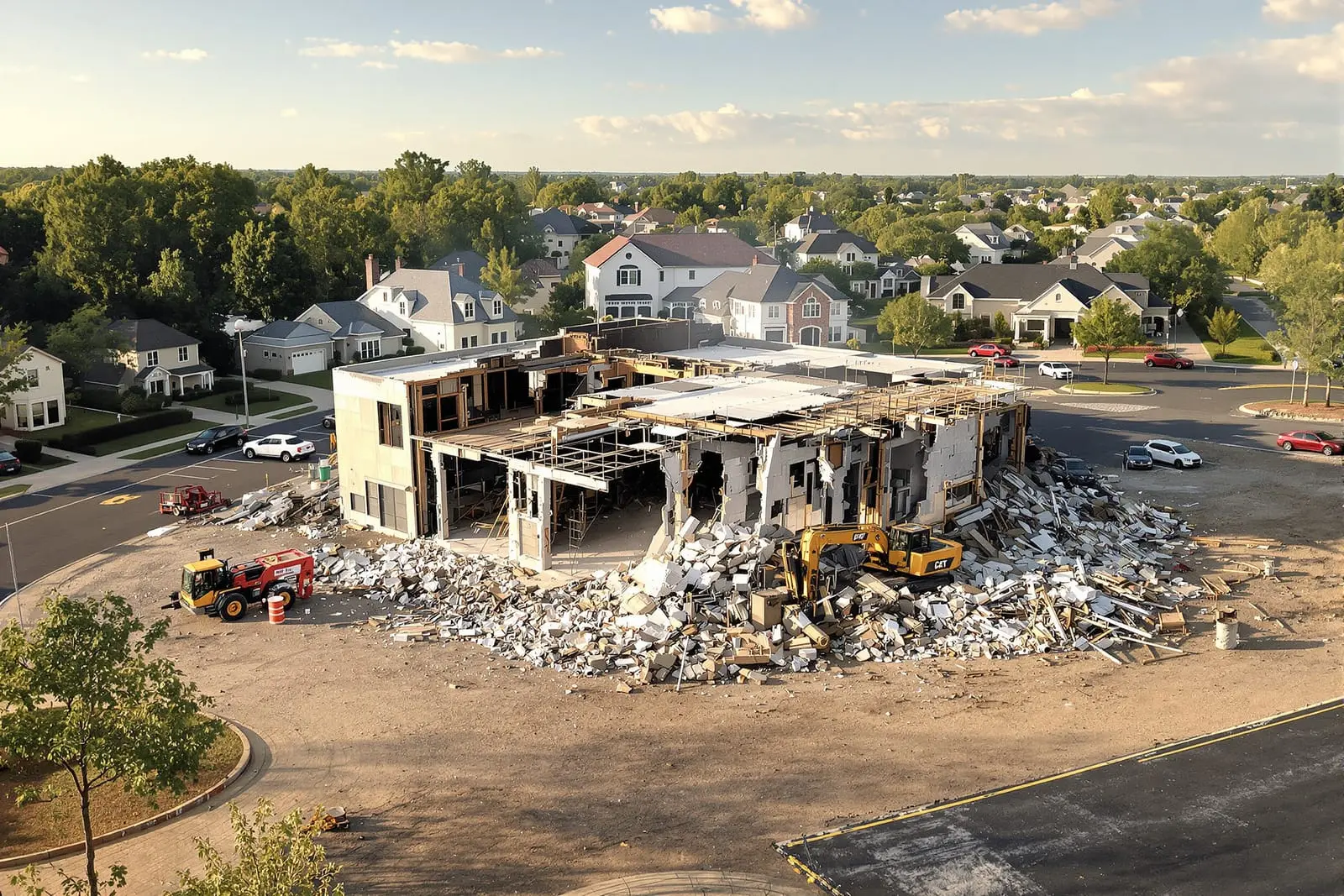
We coordinate explosive and implosion demolition in Atlanta, GA for select high rise or complex structures where conventional methods are not practical.
We coordinate explosive and implosion demolition in Atlanta, GA for select high rise or complex structures where conventional methods are not practical. Working with specialty engineers and blasting experts, we develop detailed plans, safety perimeters, and dust control. These projects are executed under strict regulatory oversight for maximum safety.
Wrexo Demolition Atlanta provides professional implosion demolition throughout Atlanta, GA and the surrounding area. Our licensed, insured crew delivers safe, clean, on-time work with a free estimate before anything begins. Call (678) 561-8690 or request your free quote.
Explosive & Implosion Demolition in Atlanta, Done the Right Way
Implosion demolition is one of the most complex types of demolition work, and it needs more than just explosives. It requires deep structural understanding, careful planning, and precise timing. Wrexo Demolition Atlanta provides turnkey explosive and implosion demolition services for high rises, stadiums, industrial plants, and large concrete or steel structures throughout the Atlanta metro area.
In practical terms, an implosion demolition means we weaken and remove key structural elements inside a building, place engineered explosive charges at calculated points, and trigger them in a specific sequence so the structure folds in on itself. The goal is to bring the building straight down within its own footprint, without damaging surrounding streets, utilities, or neighboring properties.
Atlanta presents unique challenges such as dense traffic patterns around I‑75, I‑85, and the Connector, older masonry buildings located next to newer steel construction, and buried utilities that may be poorly mapped. Our team lives and works here, so our designs, safety zones, and scheduling are built around Atlanta conditions, not a generic demolition playbook.
How the Implosion Demolition Process Works Step by Step
Every explosive or implosion demolition Wrexo Demolition Atlanta completes follows a detailed, repeatable process that is adapted to the specific building and neighborhood.
1. Structural survey and 3D modeling: Our engineers review original drawings if available, then perform an on-site structural survey. We map out columns, beams, transfer girders, shear walls, and load paths. For complex structures, we create a 3D model and run collapse simulations to predict how the building will behave when charges are detonated.
2. Pre-weakening and selective removal: Before any explosives are placed, our crew cuts, saws, or removes selected non-critical elements so the structure will fail along planned lines. This may include interior partitions, stairwells, or carefully chosen sections of concrete slab. We ensure that temporary supports are in place as needed so the building remains stable until detonation day.
3. Charge design and placement: Licensed blasting specialists determine the type and amount of energetic material needed for each location. For example, heavily reinforced concrete columns may require shaped charges and precise wrapping, while lighter structural steel may only need linear charges at connection points. Every charge is logged, labeled, and double-checked. Nothing is left to memory.
4. Wiring, blasting circuits, and testing: Our team runs detonating cord or electronic initiation systems through protected paths inside the building. Circuits are tested repeatedly with blasting meters so we can detect any broken lines or miswired connections long before the countdown. Redundant firing circuits are often installed so we have a backup if a section fails.
5. Safety perimeter and day‑of operations: Working with Atlanta Police, local fire departments, and traffic control teams, we establish exclusion zones and detour routes for the morning of the implosion. Buildings nearby are notified about vibration, dust, and timing. On detonation day, all sites are swept, zones are locked down, and the blaster-in-charge controls the final firing sequence from a secure command point.
6. Immediate post-blast inspection: Once cleared for re-entry, our supervisors check that no structural elements are left standing dangerously and that utilities like gas lines and overhead power have not been compromised. If any partial standing walls remain, mechanical equipment is brought in the same day to reduce them to a safe level.
Local Atlanta Factors That Shape Your Implosion Demolition Plan
In Metro Atlanta, planning an explosive or implosion demolition is heavily influenced by local codes, soil conditions, weather patterns, and traffic. Wrexo Demolition Atlanta has learned through experience how these variables affect cost, schedule, and feasibility.
Permitting and code coordination: The City of Atlanta and surrounding jurisdictions such as DeKalb, Fulton, and Cobb have distinct permit paths for blasting. You can expect fire marshal reviews, pre-blast surveys, and sometimes public information meetings for larger projects. We handle submittals for blast plans, vibration limits, and dust control plans, and we attend city or neighborhood meetings so you do not have to navigate the process alone.
Soils and utilities: Much of Atlanta has dense red clay that transmits vibration differently than sandy soils. This affects how far we need to monitor vibration and what charge sizes we can safely use. Underground utilities may not match old drawings, especially in historic neighborhoods like Old Fourth Ward or Grant Park. We use ground penetrating radar and private utility locating before we finalize charge placement or commit to a blast radius.
Weather and scheduling: For Atlanta projects, late fall and winter often provide the most predictable windows for implosion work. Summer thunderstorms, high humidity, and afternoon heat can disrupt setup and reduce visibility for dust control. When an implosion is scheduled during warmer months, we typically plan an early morning firing window and increase water spray and dust monitoring to account for thermal air currents.
Traffic and event coordination: Large events around Mercedes‑Benz Stadium, State Farm Arena, or the convention district can limit how and when streets can be closed. We check city calendars and work with GDOT and local agencies to choose dates and times that avoid conflicts with Falcons games, concerts, or festivals. This coordination can reduce police costs and minimize disruption for surrounding businesses.
Cost Drivers and Budget Planning for Implosion Demolition
Explosive and implosion demolition is often more cost‑effective than long-term mechanical demolition on high or heavily reinforced structures, but pricing is very specific to the site. Wrexo Demolition Atlanta provides detailed, line‑item estimates so you understand what you are paying for and where you have options.
Major cost drivers include:
1. Structure type and complexity: Tall reinforced concrete towers, post‑tensioned slabs, and mixed steel-concrete frames require more engineering time and more explosives than light commercial buildings. Irregular footprints or heavy cantilevers increase modeling time and charge design complexity.
2. Proximity to sensitive neighbors: If your project is near hospitals, data centers, laboratories, or historic buildings, we must design to stricter vibration and air overpressure thresholds. That may require additional monitoring equipment, micro‑charge sequencing, and in some cases partial mechanical demolition instead of a single full implosion.
3. Site constraints and access: Limited staging space for equipment, narrow downtown streets, and restrictions on lane closures all affect how we bring in materials, position water trucks, and set up command posts. These logistics are included transparently in your estimate.
4. Environmental and disposal requirements: If asbestos, lead paint, or PCB-containing materials are present, they must be abated or managed before blast day. Landfill tipping fees for concrete, masonry, and steel recycling revenue also influence total cost. We can present alternatives such as on-site concrete crushing for re-use in backfill or road subbase.
5. Insurance and risk allocation: Implosion work requires higher liability coverage, project-specific insurance endorsements, and compliance with lender or owner risk requirements. Wrexo Demolition Atlanta carries the coverage needed for large-scale blasting and can help your risk managers review certificates and policy language.
During preconstruction, we review scenarios with you, such as full implosion versus phased mechanical-plus-blast, and explain where you can reduce cost without compromising safety or regulatory compliance.
Managing Risk, Dust, Vibration, and Neighbor Concerns
One of the biggest concerns owners in Atlanta have about implosion demolition is how it will affect neighbors, dust levels, and nearby structures. We design each project at Wrexo Demolition Atlanta to minimize community impact and provide clear information long before the blast.
Pre-blast surveys and monitoring: For buildings within a specified radius, we offer pre-blast condition surveys that document existing cracks or defects. Seismographs and air overpressure monitors are placed around the site and along sensitive property lines. This data keeps us within permitted vibration limits and provides an objective record for you and your neighbors.
Dust control planning: Dust is controlled primarily through pre-wetting of the structure, timed water cannons around the perimeter, and sometimes temporary fabric screens or debris curtains at select openings. Because Atlanta humidity can keep dust airborne longer on still mornings, we adjust water coverage and monitor wind patterns the week of the blast.
Noise and air overpressure: While an implosion is loud, careful sequencing and charge design prevent damaging pressure waves. We calculate expected air overpressure at the property line and adapt charge weights and initiation timing so that readings remain within safe limits. Nearby tenants are notified of what they will hear and feel so they are not surprised by the event.
Debris confinement and cleanup: Structural design of the collapse path is the primary control for debris spread. We also use setback calculations, protective fencing, and in some cases temporary earth berms or shipping containers to catch stray fragments. After the implosion, cleanup starts immediately, typically the same day, to restore sidewalks, streets, and access routes.
Public communication: For significant Atlanta implosions, we help coordinate press releases, resident notices, and site signage that explains timing, safety zones, and viewing restrictions. Clear communication reduces anxiety in the neighborhood and builds confidence that the work is controlled and professionals are in charge.
When Explosive or Implosion Demolition Is the Right Choice
Not every building in Atlanta should be imploded. In many cases, mechanical demolition using excavators and high‑reach equipment is more appropriate. Wrexo Demolition Atlanta will only recommend explosive or implosion demolition when it solves a specific problem better than other methods.
Explosive or implosion demolition is often the best option when:
• The structure is very tall or heavily reinforced, such as high‑rise office towers, stadium seating bowls, or large concrete silos.
• Site access is restricted and there is not enough room for long-term mechanical equipment, debris stacking, and truck circulation.
• The project must be completed in a compressed timeframe, for example to clear a site for a major redevelopment tied to a financing or tax credit deadline.
During early consultations, we review your schedule, budget, and site constraints. Sometimes we might suggest a hybrid approach: top floors removed mechanically to reduce risk to adjacent buildings, followed by a controlled implosion of the remaining core. In other situations, such as tight historic districts or where utilities can not be relocated, we may advise against explosives altogether and design a pure mechanical solution.
Our goal is to be your technical partner, not simply a blasting vendor. We explain the options, outline the risks in plain language, and work with your architects, engineers, and lenders so everyone understands how and why a particular method is being used. With Wrexo Demolition Atlanta, you get a local team that treats your project as if it were happening in our own neighborhood.
“
Professional explosive and implosion demolition, done right the first time, quality materials, honest pricing, and results that last.
Wrexo Demolition Atlanta
Explosive and Implosion Demolition Across Our Service Area