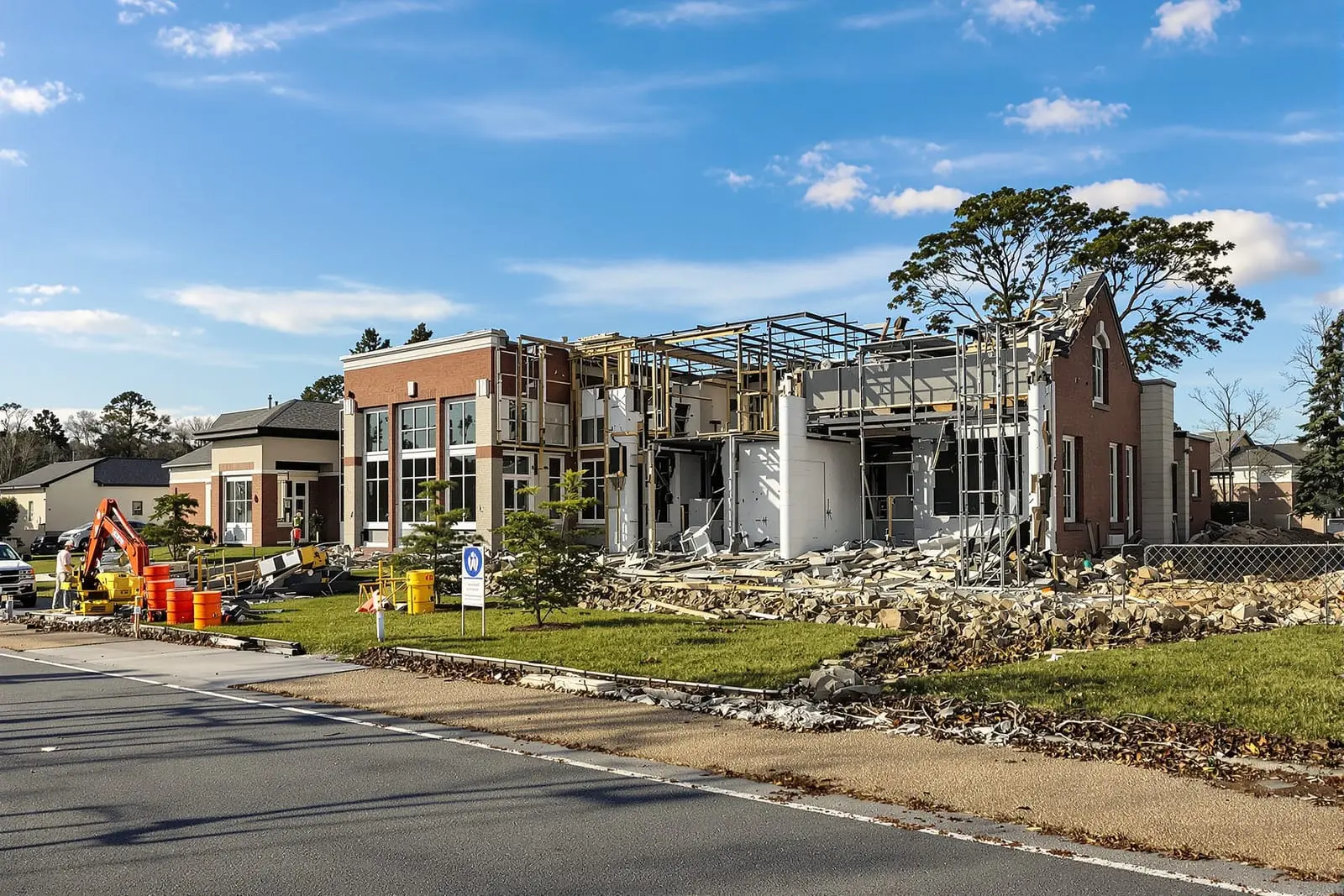
We provide school and institutional demolition services in Atlanta, GA for classrooms, campuses, and public buildings. Our team plans around academic calendars and community needs, managing noise, dust, and safety. From partial wing removals to full building tear downs, we protect surrounding facilities and infrastructure.
Wrexo Demolition Atlanta provides professional school demolition throughout Atlanta, GA and the surrounding area. Our licensed, insured crew delivers safe, clean, on-time work with a free estimate before anything begins. Call (678) 561-8690 or request your free quote.
School Demolition Specialists Serving Atlanta Neighborhoods
Wrexo Demolition Atlanta provides targeted school and institutional demolition services for public, private, and charter campuses across the Atlanta metro area. We understand that taking down a wing of classrooms in Decatur, removing a failing gym in College Park, or clearing an entire outdated school in Fulton County affects students, staff, and nearby homeowners. Our team focuses on safe, code-compliant work that respects your calendar, your neighbors, and your budget.
School demolition is not the same as tearing down a house or retail building. You are dealing with complex fire alarm networks, low voltage systems, lab utilities, and sometimes hazardous materials from older construction. We plan each project around how your campus actually functions, including traffic flow, bus loops, student drop off, and shared utilities with adjacent buildings that must stay open.
Whether you represent Atlanta Public Schools, a private academy in Buckhead, a college facility department, or a faith-based school in the suburbs, Wrexo Demolition Atlanta can help you remove outdated structures efficiently so you can focus on the new build and getting students back in learning spaces.
How School Demolition Projects Typically Work
A typical school demolition project in Atlanta starts with a site walk where our project manager, superintendent, and your facilities or construction representative review existing conditions. We identify which buildings or wings are coming down, which must stay active, and how utilities run between them. We also note bus routes, carpool lanes, nearby residential streets, and any shared parking with churches or parks.
Next, we coordinate pre-demolition surveys and utility locates. For schools, this often includes identifying data and fiber lines, campus bell and intercom systems, security camera cabling, and fire alarm loops, not just water, sewer, gas, and power. We work with your design team to confirm which systems will be abandoned and which must be protected and rerouted before any structure is touched.
Once the plan is set, we create a phasing schedule that fits your calendar. Many metro Atlanta projects occur in the summer break or over multi-year bond programs. If work must occur while students are present, we design secure construction fencing, screened barriers, and safe travel paths for students and staff. Only then do we mobilize equipment, such as excavators with concrete processors, high-reach attachments for taller classroom buildings, and smaller skid steers for interior and courtyard work.
Throughout demolition, we maintain daily housekeeping, separation between active campus areas and work zones, and constant coordination with your point of contact. Debris is removed with minimal disruption, often using off-peak hauling hours to avoid dismissal times and local traffic surges.
Permits, Codes, and Environmental Rules Specific to Metro Atlanta
School demolition in Atlanta requires more than a standard demolition permit. Wrexo Demolition Atlanta assists owners and general contractors with navigating City of Atlanta permitting or the specific jurisdiction such as DeKalb, Cobb, Clayton, Gwinnett, or Fulton County.
Most institutional demolitions trigger the need for an asbestos survey under Georgia Environmental Protection Division rules, even if the building looks modern. Any friable asbestos must be abated by a licensed contractor before structural demolition begins. We schedule our sequencing to avoid downtime between abatement and demolition and to maintain compliance with notification requirements to the state.
Depending on location, you may also need erosion and sediment control measures and tree protection plans, particularly inside the City of Atlanta and in jurisdictions that follow Georgia EPD guidelines closely. For campuses near streams or retention ponds, we install silt fencing, construction entrances, and sometimes temporary stormwater measures to keep soil from leaving the site.
Fire department coordination is another local factor. For partial school demolition, Atlanta Fire Rescue or the local fire marshal often require clear access routes, operational hydrants, and protection or rerouting of fire alarm systems tied to adjacent buildings. We help prepare the demolition scope and sequence so that life safety coverage is never compromised while older wings are being removed.
Handling Asbestos, Lead, and Other School-Specific Hazards
Many Atlanta schools built before the late 1980s contain materials that cannot be treated like normal debris. Floor tiles, pipe insulation, ceiling textures, mastics, and boiler components may require asbestos abatement. Older campus buildings often have lead-based paint on metal railings, exterior windows, and older playground features.
Wrexo Demolition Atlanta coordinates closely with third-party environmental consultants and abatement contractors. We use their survey reports to map out which materials must be removed before demolition and which can be handled through regulated demolition techniques. Demolition does not begin until clearance reports confirm that regulated materials have been removed or encapsulated according to law.
For science labs, vocational shops, and maintenance buildings, we plan for chemical storage, gas lines to lab tables, emergency eyewash connections, and sometimes underground storage tanks or oil-water separators. Our team isolates and removes these systems carefully to prevent spills and to keep you in compliance with state and local environmental regulations.
This careful approach protects students and staff who may return to adjacent buildings soon after demolition, and it also protects the owner from costly delays or violations tied to improper handling of hazardous materials arising from school demolition.
Safety, Noise Control, and Working Around Active Campuses
Keeping students, staff, neighbors, and our own crews safe is the core of our approach. Wrexo Demolition Atlanta develops a site-specific safety plan for each school or institutional project that covers fencing, signage, traffic control, and emergency procedures. We typically design separate gates for construction vehicles and campus traffic to prevent conflicts.
Noise and vibration are frequent concerns for nearby classrooms, testing days, or residential neighbors. We sequence the loudest activities, such as slab breaking or heavy concrete processing, during windows you approve, often early in summer schedules or on non-instructional days. For partial demolitions next to operating classrooms, we utilize smaller equipment, saw-cutting instead of impact breaking where feasible, and debris handling methods that reduce banging and dropping.
Dust control is another priority. We use water misting at the point of impact, wheel-wash areas when needed, and covered loads for hauling debris off campus. These measures keep air quality better for anyone on adjacent sports fields, playgrounds, or sidewalks and demonstrate to the surrounding community that the school is being a responsible neighbor during construction.
Our supervisors remain in direct communication with your principal or facilities director so any changes to testing schedules, major events, or bus routing can be factored into the daily work plan with minimal disruption.
What Drives The Cost of School Demolition in Atlanta
Owners and facility managers often ask why school demolition pricing can vary widely from one project to another. The largest cost driver is typically complexity, not just square footage. A free-standing, single-story classroom building with simple utilities is far less costly than a multi-story wing that shares walls, utilities, and fire protection systems with buildings that must stay active.
Hazardous materials are another major factor. An older brick school in Atlanta that needs full asbestos abatement in floor tile, pipe insulation, and roofing will cost more to bring down safely than a newer addition with minimal regulated materials. The amount of concrete, structural steel, and masonry also affects costs because these materials require heavier equipment, more processing, and additional hauling.
Access to the building and haul routes across campus influence pricing as well. Tight urban campuses where trucks must use narrow streets, or where work can occur only in limited hours to avoid bus traffic, often require more time and staging. Rural or suburban schools with large open lots and direct street access are faster to clear.
Finally, schedule expectations affect cost. Compressing demolition into a short summer break may require larger crews, multiple shifts, or additional equipment to ensure the site is ready for the next phase before teachers return. We walk you through these factors in detail so you understand where your demolition dollars are going and can make informed scope decisions.
How to Plan Your School or Institutional Demolition With Wrexo
If you are planning a bond-funded campus replacement, consolidating facilities, or removing a single outdated building, early demolition input can save significant money and time. Wrexo Demolition Atlanta encourages school districts, private schools, and institutional owners to involve us during schematic or design development so we can flag demolition constraints that might affect your future site layout or schedule.
We can help you evaluate whether selective interior demolition, such as removing walls and ceilings in a gym or auditorium, is more cost effective than full structural removal, especially when existing foundations or utilities can be reused. Our team also assists with planning safe separation joints between old and new construction so demolition of older wings does not damage structures you want to keep.
For projects still seeking board or donor approval, we provide realistic demolition budgets, not generic allowances. These line items can include permitting support, environmental surveys and abatement allowances, demolition, hauling, backfill, and rough grading so stakeholders see the full picture.
When you are ready to move forward, we establish clear milestones: notice to proceed, utility cutoffs, abatement completion, structural demolition, debris removal, and final site stabilization. By the time we demobilize, your site is clean, secured, and ready for your next contractor to begin foundations, utilities, or temporary classrooms without delay.
“
Professional school and institutional demolition, done right the first time, quality materials, honest pricing, and results that last.
Wrexo Demolition Atlanta
School and Institutional Demolition Across Our Service Area